STAGE 6 – (O+P+Q+R)
(The Caretaker on Stage 6)
Post-Awareness Stage 6 Is without description.
Album Cover – Stage 6
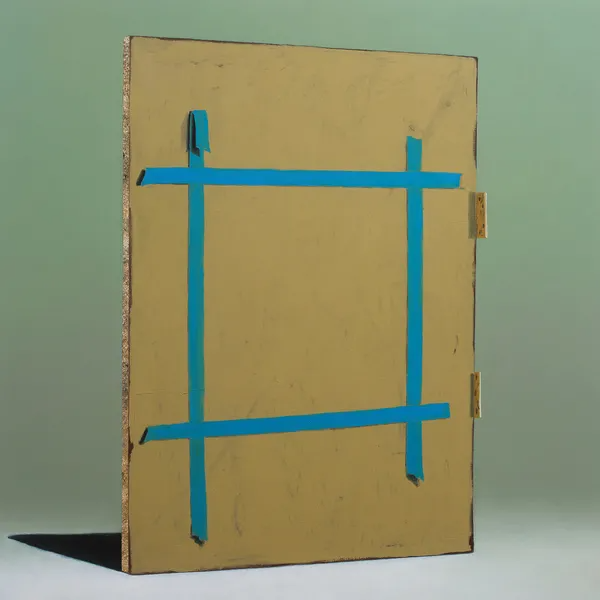
While reading through the comments of Everywhere on YouTube, I came across someone who said Stage 6’s art reminded them of something their grandparent would excitedly run to show them, even though it was generally unrecognizable to them.
This made me think that the art for Stage 6 represents an overall acceptance by The Caretaker that clear memory and recall is impossible for them. Once they are unable to clearly comprehend simple images like a sheet of cardboard or the back of a painting, they realize that everything they once knew is gone, and their end is swiftly approaching.
Waveforms and Song Analysis – Stage 6
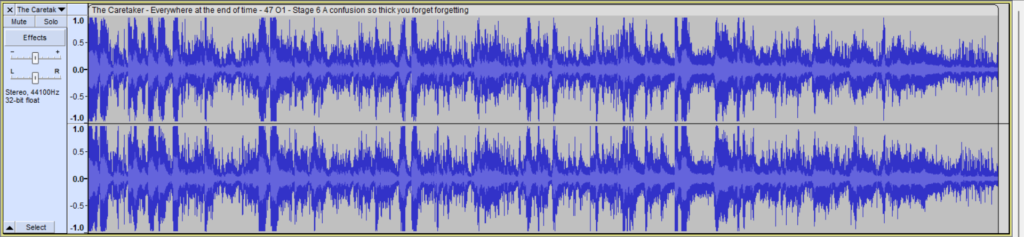
Transitions naturally from the end of Stage 5. A dark humming plays softly.
The static has transformed from a constant noise to little blips of sound, echoing around the listener’s head.
These are the sounds of a decayed, broken world. Low humming noises are mixed with white noise that vaguely sounds like waves upon a shore, rushing back and forth.
The tone of this track is very reserved. Dark, as if the person has given up on trying to figure out what they have forgotten, and is left to stew in their emptiness. Occasionally, slightly harsh noises play that make me think about sharp bolts of pain.
This track is also oddly calming. There aren’t many alarming or loud noises, just the low-pitched humming and white noise. This creates a sense of finality and peace, in a strange way.
Not many noticeable changes in the foundation of this track; it largely uses the same pattern throughout.
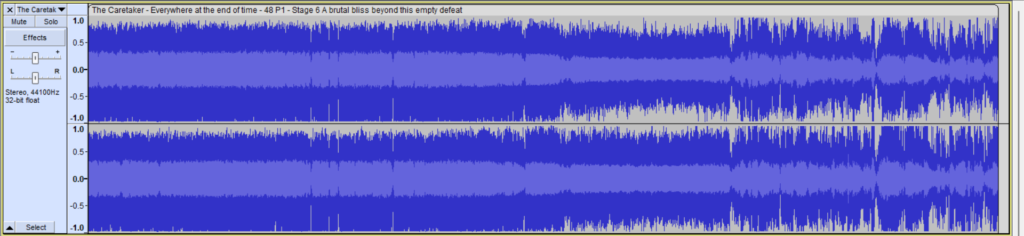
Loud white noise overtakes the calm from the previous track. This could certainly be described as a “brutal bliss”, as it sounds like the calming tune from O1 was bass-boosted and can be heard much louder now. The audio occasionally peaks, making it sound as if it were crackling out. These peaks become more frequent as the track continues.
Eventually, the same static that switches between ears begins to play very softly in the background- almost imperceptible. This static becomes louder, and speeds up and slows down randomly. It stops after a couple minutes, leaving the same white noise and crackling noises from before. These noises continue for a couple minutes.
Then, a low brass instrument plays a few ominous notes. This is the first example of music in the project for a long time.
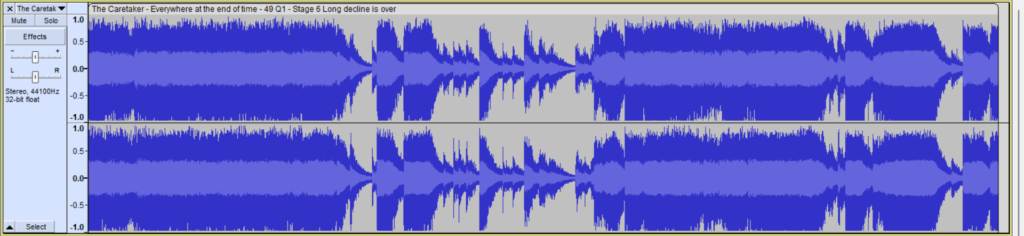
This track starts with a quick moment of silence. Low white noise plays, slightly more distorted than the last track. The low brass noises occur occasionally, although they become slightly lighter as time goes on. A mysterious, high-pitched blip plays, only for a second before it echoes out.
Soon, the track goes silent. This silence lasts longer than usual. The noise comes back, then returns to silence once again. Then, the noise returns, with a few notes of a distorted piano melody behind it.
There are multiple occurrences of switching between silence and a few seconds of dark noise.
After continuing for a few minutes, this switches to a cracked humming noise, creating feelings of confusion in the listener. The track then switches between this noise and the darker white noise, although the switches do not occur as frequently this time.
Near the end of the track, a lighter white noise overtakes the previous sounds. The low brass from earlier can be heard quietly playing in the background. After this plays for a few minutes, the brass becomes louder- ominous.
At the end, some quiet music can be heard, though it fades to silence quickly.
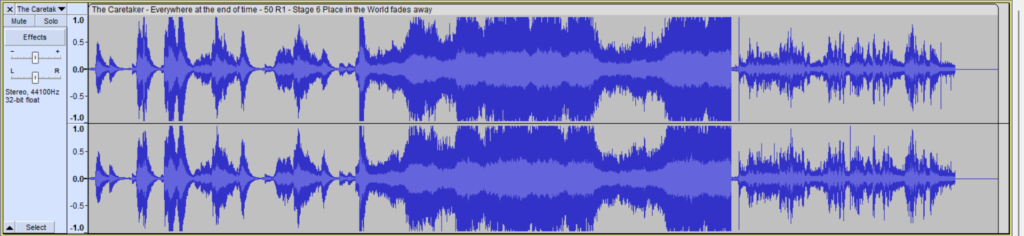
This track begins with pure silence. Waves of noise slowly fade in and out. The silence lasts an uncomfortably long time, and no static is heard when it plays. Brief interludes of musical white noise play in-between silences.
After one silence, a lighter, higher-pitched humming begins playing. It rises in volume and pitch as it continues. It strangely reminds me of seeing the light before dying, since it feels so magical in comparison to the cacophony of noises playing earlier. This noise continues for a while. It’s honestly refreshing to hear. Then, it descends back down and quiets. When it rises in volume and pitch once again, a light ringing sound can be heard.
The ringing and humming stops abruptly, leaving silence and static.
Then, a very clear piano melody plays alongside some static. This is the clearest the music has been for hours. This reminds me of terminal lucidity- when memories come back briefly right before death.
There is a sense of relief, but also a bittersweet sadness. This is it- this is the end. A distorted voice sings a sad tune along with the piano. This is the first time a voice has been heard in the album, although the heavy distortion almost makes it sound like more unrecognizable noise. When the song concludes, the track ends with around a minute of pure silence. The final minute before death.
Stage 6 Conclusions

Leyland Kirby stated that Stage 6 is simply “beyond description”.
In Stage 6, The Caretaker seems to be resigned to their fate. The titles of each track deviate from their previously clinical nature, and become more meaningful and poetic again (A confusion so thick you forget forgetting; A brutal bliss beyond this empty defeat; Long decline is over; Place in the World fades away).
Although there are not many clearly recognizable music samples, Stage 6 is much calmer than the previous two stages. A lot of it consists of alternations between a quiet white noise and a degraded static. The “white noise” itself may even be an incredibly slowed and pitched-down music track, although it is too low and deep in sound to be able to confirm this.
During this stage, the terror from Stage 5 gradually fades away- along with everything else, including the static, which has been an incredibly prevalent theme in the project.
The final track, “Place in the World fades away”, is perhaps the most interesting in the album, which is emphasized by the fact that the ending is labeled as the “Most Replayed” section of Everywhere on YouTube.